
What is the Keto Diet?
The ketogenic diet — commonly called keto — is a high-fat, very low-carbohydrate eating plan designed to shift your body into a metabolic state called ketosis[1]. In ketosis, your body runs on fat for fuel instead of glucose. Some people following the diet report steadier energy, reduced hunger, or weight change over time, but individual response to any diet depends on health status, goals, and adherence, and no specific outcome is guaranteed[2].
How does the keto diet work?
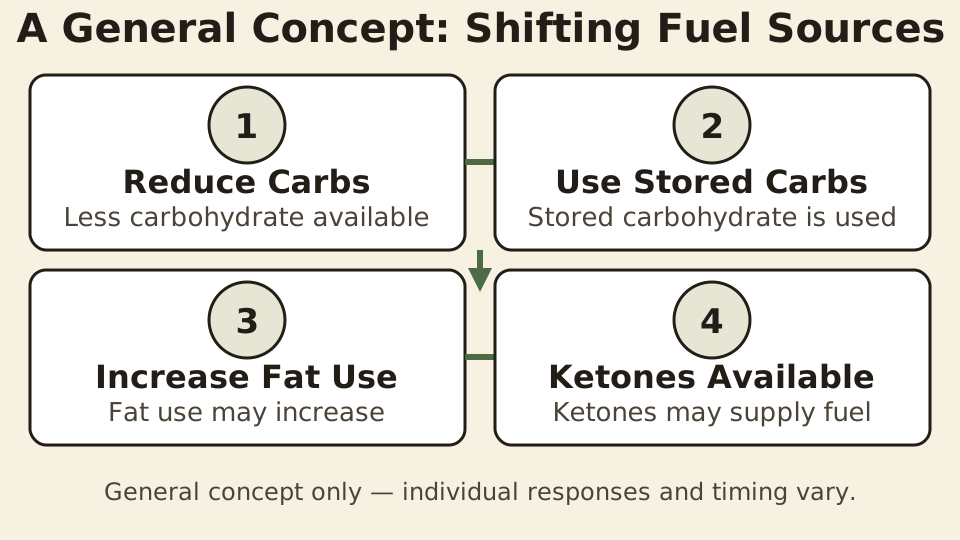
Normally your body burns carbohydrates for energy. When you reduce carb intake enough — commonly cited ranges are roughly 20–50g of net carbs per day, though the exact number that produces ketosis varies by person and there is no single figure that works for everyone — your liver begins converting fat into molecules called ketones, which become an additional fuel source for the brain and body. This switch from relying mainly on glucose toward greater use of ketones is the defining feature of the ketogenic diet[1]. Reaching or maintaining ketosis is not guaranteed by any fixed carb number; it depends on the individual. Once you start reading labels, it helps to understand the difference between net carbs and total carbs, since only one of them actually matters for staying in ketosis.
What is a typical keto macronutrient pattern?
A standard ketogenic diet follows roughly this ratio of daily calories:
🥑 Fat: 70–75% — the foundation of every meal
🥩 Protein: 20–25% — enough to preserve muscle without spiking glucose
🥦 Carbohydrates: 5–10% — often cited as roughly 20–50g of net carbs per day, though carb tolerance for ketosis varies by person and this is not a fixed number that applies to everyone
How is keto different from a general low-carbohydrate diet?
Many low-carb diets simply reduce carbohydrate intake without a specific fat or ketone target. Keto is more specific: it combines a much lower carbohydrate intake with a deliberately high fat intake, aiming for the metabolic shift toward greater ketone production described above. A moderately low-carb diet (for example, cutting out soda and white bread) may not reduce carbohydrate intake far enough to produce meaningful ketone production, even though it is still a useful change for some people. In practice this means two foods that look similar on a shelf can affect a keto plan very differently depending on their net-carb count, not just whether they are "low carb" in a general sense.
What foods are commonly eaten on keto?
Commonly included: Meat, fish, eggs, cheese, butter, olive oil, avocados, nuts, seeds, leafy greens, and non-starchy vegetables.
Commonly limited or avoided: Bread, pasta, rice, potatoes, sugar, most fruit, beans, and anything made with wheat flour or added sugar.
For the full breakdown by category, see our complete list of keto-friendly foods, or start with our keto grocery shopping guide before your next shop. If you'd like to see what a full week of these foods actually looks like on a plate, our 7-day keto meal plan for beginners is a practical starting point.
What should beginners check on a food label?
Before assuming a packaged food fits keto, check three lines on the Nutrition Facts label: the serving size (all other numbers on the label are for that amount only, not the whole package), Total Carbohydrate, and Dietary Fiber. Then scan the ingredients list for sugar alcohols (erythritol, xylitol, maltitol, and similar) or allulose, since these affect how many of the listed carbs actually count toward a keto carb budget. A product with a low "net carb" claim on the front of the package should still be checked against its own label — front-of-package claims are marketing, not a substitute for reading the panel yourself. For a complete walkthrough of the full label-reading order, see our guide to reading nutrition labels for keto. If you're deciding what to eat instead of a higher-carbohydrate food, our keto food swaps guide covers practical lower-carbohydrate alternatives for bread, rice, pasta, potatoes and more.
What benefits are commonly associated with keto?
Weight and appetite: Some people report reduced appetite and weight change while following keto, though results vary by individual and are not guaranteed[2].
Energy patterns: Without frequent blood sugar swings from high-carb meals, some people report steadier energy through the day.
Blood sugar and metabolic research: Keto and other low-carbohydrate approaches are studied in the context of type 2 diabetes and insulin resistance, but any dietary change for a medical condition should be discussed with a healthcare professional rather than adopted from an article alone[2].
None of this is a promise of a specific health outcome for any individual — see a healthcare professional before starting keto if you have a medical condition or take medication.
How can The Keto Scan help compare products?
The easiest way to check whether a specific product fits a keto plan is to look at its net carbs per serving on the nutrition label[3]: net carbs = total carbohydrate − dietary fiber − sugar alcohols (with allulose handled separately — see our full methodology). The Keto Scan uses internal ranges to label products: 0–3g net carbs per serving as Very Keto-Friendly, 4–6g as Keto-Friendly, 7–10g as Moderate (portion matters), 11–15g as High for Keto, and above 15g as Usually Not Keto-Friendly. The Keto Scan uses these ranges as its own general product-classification method, not an official government or medical standard. Scanning a barcode with The Keto Scan runs this calculation automatically instead of requiring manual label math. Watch out for hidden carbs in foods marketed as healthy or sugar-free — they can knock a product out of a keto-friendly range even when the front of the package looks keto-friendly.
Not sure if a product fits your keto diet? Use The Keto Scan to check any product instantly — just scan the barcode and get a score and verdict in seconds.
Try The Keto Scan →Sources and references
- MedlinePlus (National Library of Medicine, NIH) — Ketones in Blood
- NIDDK (National Institutes of Health) — Choosing a Safe & Successful Weight-loss Program
- U.S. Food and Drug Administration — How to Understand and Use the Nutrition Facts Label
This article is educational, not personal medical advice. Sources are selected from government, institutional, and peer-reviewed research where available. For guidance on your own health or diet, consult a qualified healthcare professional. See our editorial standards and full Disclaimer.