
How to Read Nutrition Labels for Keto
What should you check first on a Nutrition Facts label?
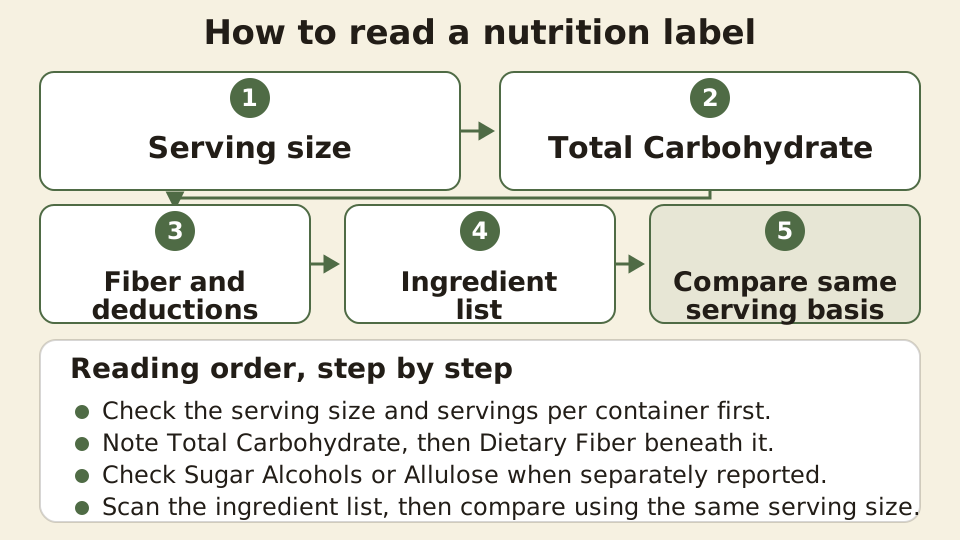
Before comparing any two packaged products, start at the top of the Nutrition Facts panel with serving size and servings per container, then work down through Total Carbohydrate, Dietary Fiber, and any separately reported Sugar Alcohols or Allulose[1]. Reading the panel in this fixed order — rather than jumping straight to a front-of-package claim like "keto" or "low carb" — is the fastest way to get an accurate picture of a product before you decide whether it fits your plan. This guide focuses on where to find each figure and what it means; the full net-carb formula and worked examples live on our how to calculate net carbs page, and the complete sugar-alcohol deduction table is documented there rather than repeated here.
Why do serving size and servings per container matter?
Every number on a Nutrition Facts panel — calories, Total Carbohydrate, fiber, sugars — is reported for one labeled serving, and the manufacturer sets that serving size[2]. Two products can look similar per serving while actually differing once you account for how many servings are in the package or how much you'd realistically eat in one sitting. Before comparing two products, check that you're comparing the same serving size or the same weight basis (per 100g is useful when package sizes differ) — otherwise a lower per-serving figure can be misleading if that product's serving size is simply smaller.
Where do you find Total Carbohydrate?
Total Carbohydrate sits on its own line on the Nutrition Facts panel, above Dietary Fiber and Total Sugars, and it is the starting figure for any net-carb calculation[1]. Do not substitute Total Sugars for Total Carbohydrate — sugars are only one component of total carbohydrate, and a product can carry meaningful starch or other carbohydrate with a low sugar figure. See net carbs vs. total carbs for the fuller explanation of why the total figure alone is not the number most keto-style comparisons rely on.
How should you read fiber, sugar alcohols and allulose?
Dietary Fiber is listed directly beneath Total Carbohydrate and is generally subtracted when estimating net carbs; the complete calculation method, including how fiber is handled, lives on our net carb calculation guide rather than being duplicated here. Sugar Alcohols may appear as their own line beneath Total Carbohydrate when a product contains them, and the ingredient list is what tells you which specific sugar alcohol is used — the deduction applied differs meaningfully by type, and not every sugar alcohol is deducted in full. Allulose is a separate case worth understanding on its own: it is a rare sugar, not a sugar alcohol, and some labels report it on its own line. The exact treatment and full ten-row deduction table for both sugar alcohols and allulose are documented on the net carb calculation page — this article intentionally does not reproduce that full table.
What do Total Sugars and Added Sugars tell you?
Total Sugars and Added Sugars appear beneath Dietary Fiber and Sugar Alcohols on the panel[3]. Neither figure is a substitute for Total Carbohydrate: a product with 0g Added Sugars can still carry a meaningful amount of carbohydrate from starch, flour, or other ingredients, so a "no added sugar" claim on the front of a package is not, by itself, evidence that a product is low in carbohydrate. Added Sugars is useful as a separate data point — for example, to distinguish a product sweetened during processing from one whose sugar occurs naturally — but it should be read alongside Total Carbohydrate, not instead of it.
How does the ingredient list help?
The ingredient list sits below the Nutrition Facts panel and lists every ingredient the product contains, along with which sweeteners, starches, or thickeners are actually used[4]. It's the only place on the package that names a specific sugar alcohol (such as erythritol or maltitol) or confirms whether allulose is present — information the Nutrition Facts panel alone may not spell out. Coatings, sauces, syrups, starches, and added sweeteners can all shift a product's carbohydrate content, and the ingredient list is often the fastest way to spot one of these before you've even looked at the numbers.
Why does ingredient order matter?
Ingredients are listed in descending order by weight, meaning an ingredient near the top of the list makes up a larger share of the product than one near the bottom[4]. This is a general ordering signal, not a way to calculate an exact gram amount — the label does not disclose precise proportions between ingredients. Seeing sugar, corn syrup, maltodextrin, dextrose, rice starch, or a syrup-based sweetener near the top of an ingredient list is a reasonable prompt to look more closely at Total Carbohydrate, even if the front of the package carries a "keto" or "low carb" claim. For a deeper look at where these overlooked carbohydrates commonly show up by product category, see our hidden carbs guide.
How do you compare two products fairly?
Once you've read both the panel and the ingredient list, compare products using the same serving size or the same weight basis before deciding which one is actually lower in carbohydrate. Two snack bars with different serving sizes can look similar on a per-serving basis while differing once scaled to the same weight, and this same principle applies when comparing packaged foods while shopping — see our grocery shopping guide for more on comparing products in the store, and the complete list of keto-friendly foods for examples of naturally lower-carb categories that need less label scrutiny to begin with. When comparing an original food against a possible substitute, our keto food swaps guide covers practical lower-carbohydrate alternatives for common staples.
A simple label-reading example
Hypothetical label example (not a real product): imagine a packaged snack with a serving size of 30g, 12g Total Carbohydrate, 4g Dietary Fiber, 3g Sugar Alcohols, and xylitol named in the ingredient list, with 0g Allulose reported. Reading it in order: first confirm the 30g serving size and how many servings are in the package; then note the 12g Total Carbohydrate as the starting figure; then note the 4g Dietary Fiber beneath it; then identify xylitol as the specific sugar alcohol named in the ingredients, since the deduction applied depends on which sugar alcohol is used; then use our net carb calculator to apply the correct deduction and arrive at a final estimate; and finally confirm the ingredient list and serving basis before comparing this product against an alternative. This example is entirely hypothetical, illustrates the reading order rather than a specific real product, and is not a medical prediction — label formats and reported fields can vary by manufacturer.
Nutrition label reading order
The table below summarizes the reading order covered in this guide, in the sequence it's usually most useful to check each area.
| Step | Label area | What to check | Why it matters |
|---|---|---|---|
| 1 | Serving size | The amount the rest of the panel refers to | All other figures are only valid for that exact serving |
| 2 | Servings per container | How many labeled servings the package holds | Determines whether a typical portion equals one serving or several |
| 3 | Total Carbohydrate | The starting labeled carbohydrate value | The base figure before fiber or any deductible sweeteners are considered |
| 4 | Dietary Fiber | The fiber grams reported beneath Total Carbohydrate | Generally subtracted when estimating net carbs — see our net carb guide |
| 5 | Sugar Alcohols or Allulose, when reported | The reported grams and which sweetener is named in the ingredients | Deduction differs by specific sweetener — full table on the net carb guide |
| 6 | Total and Added Sugars | Both figures, read alongside Total Carbohydrate | Neither figure substitutes for Total Carbohydrate |
| 7 | Ingredient list | Order and presence of sweeteners, starches, or syrups | Ingredients are listed by descending weight, a useful ordering signal |
Where can you calculate net carbs?
Once you've read the serving size, Total Carbohydrate, fiber, and any sugar alcohols or allulose from a label, our how to calculate net carbs guide walks through the complete formula and full deduction table with worked examples. That page is the canonical reference for The Keto Scan's exact net-carb methodology; this guide is intentionally focused on where to find the inputs, not on repeating the calculation itself.
Review a product with The Keto Scan
For supported products, scan a barcode to review available net-carb information, keto score, and The Keto Scan's product verdict. Results depend on the available product or label data, so always confirm the package.
Scan a product now →Sources and references
- U.S. Food and Drug Administration — How to Understand and Use the Nutrition Facts Label
- U.S. Food and Drug Administration — Serving Size on the Nutrition Facts Label
- U.S. Food and Drug Administration — Added Sugars on the Nutrition Facts Label
- U.S. Food and Drug Administration (eCFR) — 21 CFR 101.4 — Food; designation of ingredients
This article is educational, not personal medical advice. Sources are selected from government, institutional, and peer-reviewed research where available. For guidance on your own health or diet, consult a qualified healthcare professional. See our editorial standards and full Disclaimer.