
Keto Diet Side Effects: Symptoms, Risks and Safety Considerations
This article is educational, not personal medical advice, and it does not diagnose any condition or predict how any individual will respond to a ketogenic diet. If you have a medical condition, take medication, are pregnant or breastfeeding, or are unsure whether a major dietary change is appropriate for you, talk with a qualified healthcare professional before starting.
Key takeaways
- At least one adverse event was reported by 43% of participants across the largest available review of ketogenic-diet studies, most commonly digestive symptoms like constipation.
- Early symptoms have several possible overlapping causes, so there is no single "keto flu" timeline that applies to everyone.
- Some medical conditions and medications — including insulin, SGLT2 inhibitors, and certain rare metabolic disorders — call for professional guidance before starting.
- Nutritional ketosis and diabetic ketoacidosis (DKA) are different conditions; DKA is a medical emergency.
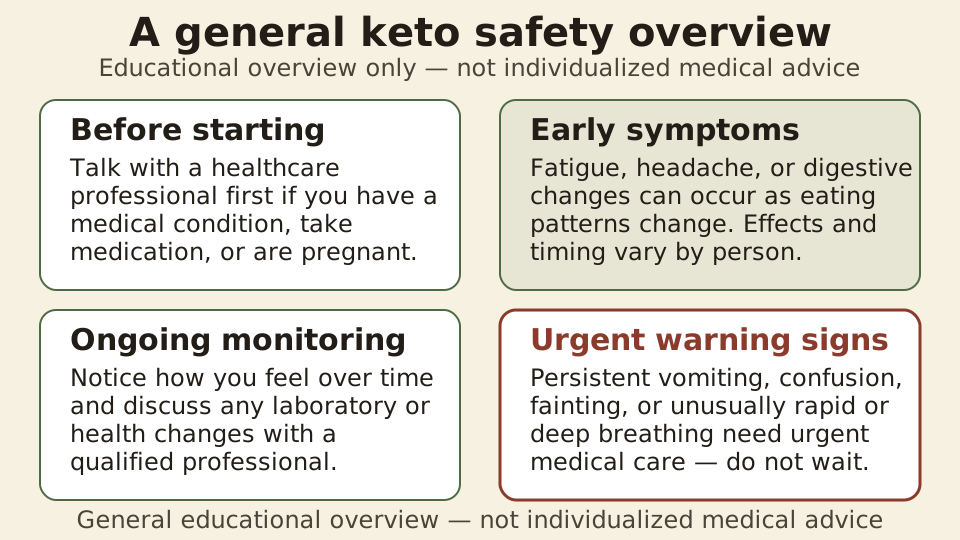
- Persistent vomiting, trouble breathing, confusion, fainting, or signs of severe low blood glucose need urgent medical care, not a website.
What side effects are commonly reported after starting keto?
A systematic literature analysis of ketogenic-diet studies found that at least one adverse event was reported in 43% of participants across 36 studies covering 42 dietary interventions.[1] Gastrointestinal complaints were the most common category, reported in about 40% of cases, followed by neurological complaints (around 17%) and metabolic or nutritional complaints (around 12%).[1] Constipation was the single most frequently reported individual adverse event, at about 24%.[1] The same analysis found that stricter versions of the diet and longer duration were associated with a higher frequency and greater severity of adverse events, and it noted that the underlying evidence is limited by inconsistent study designs and uneven adverse-event reporting across the included research.[1] These figures describe groups of study participants, not a prediction for any one person.
Why can early symptoms occur?
Early symptoms after starting a ketogenic diet are not caused by one single mechanism. A number of contributing factors can overlap, including:
- a major and often sudden change in overall eating pattern
- a sharp reduction in carbohydrate intake
- a shift in food selection toward different food groups
- a drop in dietary fiber if vegetables and whole grains are not deliberately replaced
- eating or drinking less than usual during the adjustment period
- shifts in fluid balance as eating patterns change
- interactions between certain medications and a lower-carbohydrate intake
- an unrelated illness occurring around the same time, with symptoms sometimes mistakenly attributed to the diet
Because so many overlapping factors can play a role, there is no single reliable timeline for when symptoms start, peak, or resolve for a given person. The loosely used term "keto flu" should not be treated as a single explanation that covers every possible symptom.
How can keto affect digestion?
Digestive changes are one of the most commonly reported effects of switching to a ketogenic pattern of eating.[1] Reducing grains, legumes, and some fruits can lower total fiber intake unless it is deliberately replaced with non-starchy vegetables, nuts, and seeds, and a sudden drop in fiber is one plausible contributor to constipation. On the other hand, a higher intake of fat, or of sugar alcohols and certain other sweeteners found in some low-carbohydrate products, can contribute to loose stools or nausea in some people. Individual digestive response varies considerably, and the same change in eating pattern can affect two people very differently. Checking the fiber and ingredient information on packaged foods can help you understand what is actually in your diet — see our guides to keto-friendly foods, keto grocery shopping, and reading nutrition labels for more detail. This article does not provide treatment or laxative-use instructions.
What should you know about fluids and electrolytes?
A major change in carbohydrate intake can be accompanied by shifts in fluid balance for some people, and this is commonly discussed as part of the early adjustment period. This article does not provide a specific water-volume recommendation, and it does not provide sodium, potassium, or magnesium dosages, because appropriate intake depends on individual health status, existing medical conditions, and medications, and it is not something a general article can safely determine for a specific reader. People with kidney disease, heart disease, a blood-pressure condition, an existing fluid restriction, or medications that affect electrolyte levels should not be told, by this article or any general source, to increase sodium, potassium, magnesium, or fluid intake without first getting individualized guidance from a healthcare professional, since doing so without appropriate guidance could be unsafe for those specific situations.
Can cholesterol and laboratory values change?
Laboratory values, including cholesterol markers and other blood tests, can change when overall diet composition changes substantially. The direction and size of any change varies from person to person, depending on factors such as baseline health, the specific foods chosen, and other individual characteristics. This article does not claim a ketogenic diet uniformly raises or uniformly lowers any particular laboratory value in every person, and it does not recommend a specific testing schedule or interpret what any individual result means. Reviewing laboratory changes with a healthcare professional, who can consider your full health history, is the appropriate way to interpret what a change in any value means for you.
What are the possible longer-term considerations?
Whether a ketogenic diet meets long-term nutrient needs depends heavily on the specific foods selected, not on the diet pattern in the abstract — a version built around varied vegetables, nuts, seeds, and diverse protein sources differs nutritionally from a version built around a narrow range of foods. Kidney stones have been reported in some ketogenic-diet-therapy populations. This does not mean a ketogenic diet inevitably causes kidney stones or a nutrient deficiency in any individual — risk factors vary by person. Clinically supervised ketogenic diet therapy, used for conditions such as epilepsy under medical supervision, is also a meaningfully different context from a self-directed ketogenic diet followed for weight management. Expert guidance for adults on clinically supervised ketogenic therapy notes that institutions vary in how they monitor patients biochemically over time, and that long-term monitoring approaches for clinical use differ from what applies to children or to people following a self-directed diet.[2]
Who should get professional guidance before starting?
Not every consideration below carries the same weight, and treating them all identically would be inaccurate. A small number of rare inborn errors of metabolism — including conditions affecting pyruvate carboxylase, carnitine transport or utilization, and fatty-acid oxidation — along with porphyria, are described as absolute contraindications to a ketogenic diet in the medical literature.[3] Other conditions are described as relative contraindications requiring careful individualized judgment, including acute pancreatitis, advanced hepatic or renal disease, and familial hypercholesterolemia.[3] A further group of situations calls for particular caution and individualized professional advice rather than an outright contraindication, including type 1 or type 2 diabetes managed with specific glucose-lowering medications, pharmacologically treated high blood pressure, gallbladder disease or a prior cholecystectomy, existing electrolyte disturbances, cardiac arrhythmias, pregnancy or lactation, being underweight, very intense physical activity, significant psychosocial stress, and recovery from surgery.[3] The same review also describes potential interactions between a ketogenic diet and several classes of medication, including SGLT2 inhibitors, metformin, GLP-1 receptor agonists, insulin, sulfonylureas, antiepileptic drugs, diuretics, lipophilic drugs, and corticosteroids.[3] Anyone in these categories should talk with a healthcare professional before making a major dietary change.
Why do diabetes medications require special caution?
Insulin and some other glucose-lowering medicines are dosed based on expected carbohydrate intake, so a sudden reduction in carbohydrate can increase the risk of low blood glucose (hypoglycemia) unless a clinician adjusts the medication regimen. Mild hypoglycemia can cause shakiness, hunger, dizziness, confusion, or headache. Severe hypoglycemia can cause loss of consciousness or seizure and needs emergency treatment right away; people with type 1 diabetes, those using insulin or certain diabetes medicines, people age 65 or older, those with a prior episode, and people with kidney or heart disease are described as more likely to develop it.[4] Separately, the FDA has issued a safety communication warning that SGLT2 inhibitor medications carry a risk of ketoacidosis. The median time to onset was about two weeks after starting the medication in the cases reviewed, most occurring in people with type 2 diabetes, and some cases occurred even when blood glucose was not extremely elevated, including some below 200 mg/dL.[5] Medication changes must be made by the prescribing clinician. This article does not instruct anyone to discontinue insulin, discontinue an SGLT2 inhibitor, or adjust any medication dose — that decision belongs to the person's prescribing clinician, who can weigh the specific medication, dose, and health history involved.
Nutritional ketosis versus diabetic ketoacidosis
Nutritional ketosis and diabetic ketoacidosis (DKA) are not the same condition, even though both involve ketones. Nutritional ketosis is a metabolic state that can occur with a low-carbohydrate diet in people without diabetes, generally with modest ketone levels and normally regulated blood glucose and blood pH. DKA is a medical emergency that needs to be treated right away, and reported symptoms include feeling very tired, having trouble breathing, having fruity-smelling breath, and fainting.[6] DKA is most often associated with insufficient insulin and occurs primarily in people with diabetes, though medication-related cases can also occur in people without a prior diabetes diagnosis. DKA involves a dangerous buildup of ketones and blood acidity requiring immediate medical treatment — it is not simply a more intense version of nutritional ketosis. A normal-looking blood glucose reading does not always rule out ketoacidosis: the FDA's SGLT2 inhibitor warning specifically describes cases of ketoacidosis occurring with blood glucose below 200 mg/dL, a level that would not typically be considered extremely elevated.[5]
When should you seek urgent medical care?
Seek urgent medical care for persistent vomiting, ongoing abdominal pain, difficulty breathing or unusually deep or rapid breathing, confusion, fainting, severe weakness, or an inability to keep fluids down. Also seek urgent care for symptoms of severe low blood glucose, such as loss of consciousness or a seizure,[4] or for any symptoms that could suggest diabetic ketoacidosis — such as feeling very tired, trouble breathing, fruity-smelling breath, or fainting — especially in a person with diabetes.[6]
This page cannot determine the cause of your symptoms. A possible medical emergency should not be managed by reading a website article or by using a barcode scanner — if you or someone near you has any of the signs above, contact emergency services or a healthcare professional right away. This article does not provide home-treatment instructions for any of these situations.
How can you approach a ketogenic diet more carefully?
A few practical, non-medical steps may help some people adjust more comfortably: making changes gradually rather than all at once, choosing a wide variety of foods rather than a narrow list of the same few items, paying attention to how you feel over the first several weeks rather than assuming any single day's symptoms are permanent, and seeking professional guidance in advance if you fall into any of the higher-risk groups described above. None of these steps are medical instructions, and none of them are a guarantee that side effects will not occur.
Keto side effects and safety overview
The table below summarizes commonly reported concerns, possible contributing factors, and a cautious next step. It is a general educational summary, not a diagnostic tool, and it does not replace professional medical judgment for your specific situation.
| Symptom or concern | Possible contributing factors | A reasonable next step | When to seek professional care |
|---|---|---|---|
| Headache or fatigue | Major dietary change, reduced carbohydrate intake, altered fluid balance | Review overall food and fluid intake; avoid adding further restriction quickly | If persistent, worsening, or accompanied by other symptoms |
| Dizziness or weakness | Fluid shifts, reduced food intake, individual variation | Review recent intake and rest; avoid sudden additional dietary changes | If severe, sudden, or recurring |
| Constipation | Reduced fiber intake, altered food selection | Review fiber sources in your current food choices | If persistent or accompanied by pain |
| Diarrhea or nausea | Higher fat intake, sugar alcohols or certain sweeteners, individual variation | Review recently added foods, fats, or sweetened low-carb products | If persistent, severe, or you cannot keep fluids down |
| Reduced exercise tolerance | Adjustment period, altered fluid and food intake | Consider a gradual pace of change and monitor how you feel | If it does not improve over time or feels severe |
| Changes in laboratory values | Overall change in diet composition, individual variation | Discuss any results with a healthcare professional for interpretation | Any time laboratory results are received |
| Persistent vomiting or abdominal pain | Multiple possible causes, not determinable from a website | Do not attempt to self-manage; this is not a symptom-checker page | Seek urgent medical care |
| Symptoms in a person with diabetes | Medication and carbohydrate-intake interactions | Contact your prescribing clinician before changing intake or medication | Seek urgent care for signs of severe low blood glucose or possible ketoacidosis |
Review Packaged Foods with The Keto Scan
For supported products, The Keto Scan reviews available product-label and barcode data, such as ingredients and Total Carbohydrate, to help you compare packaged foods. It does not diagnose symptoms, does not assess whether a diet is medically suitable for you, does not detect ketoacidosis, and does not predict your blood-glucose response. Results depend on the available product or label data, so always confirm the package yourself.
Scan a product now →Sources and references
- Schopf C, Assmann M, Wolke N, et al., BMC Nutrition — Adverse events and tolerability of ketogenic diets – a systematic literature analysis (PMID 41715236, PMC12930977)
- Neurology Clinical Practice — International Recommendations for the Management of Adults Treated With Ketogenic Diet Therapies (PMID 34840865)
- Annals of Medicine / PMC — The ketogenic diet is not for everyone: contraindications, side effects, and drug interactions (PMID 41486865, PMC12777878)
- National Institute of Diabetes and Digestive and Kidney Diseases (NIDDK) — Low Blood Glucose (Hypoglycemia)
- U.S. Food and Drug Administration — FDA revises labels of SGLT2 inhibitors for diabetes to include warnings about too much acid in the blood and serious urinary tract infections
- National Institute of Diabetes and Digestive and Kidney Diseases (NIDDK) — Managing Diabetes
This article is educational, not personal medical advice. Sources are selected from government, institutional, and peer-reviewed research where available. For guidance on your own health or diet, consult a qualified healthcare professional. See our editorial standards and full Disclaimer.