
Keto Food Swaps: Lower-Carb Alternatives for Everyday Foods
Key takeaways
- A swap only lowers carbs if it's compared on the same serving basis as the original food — check weight, volume, or serving size, not just the front label.
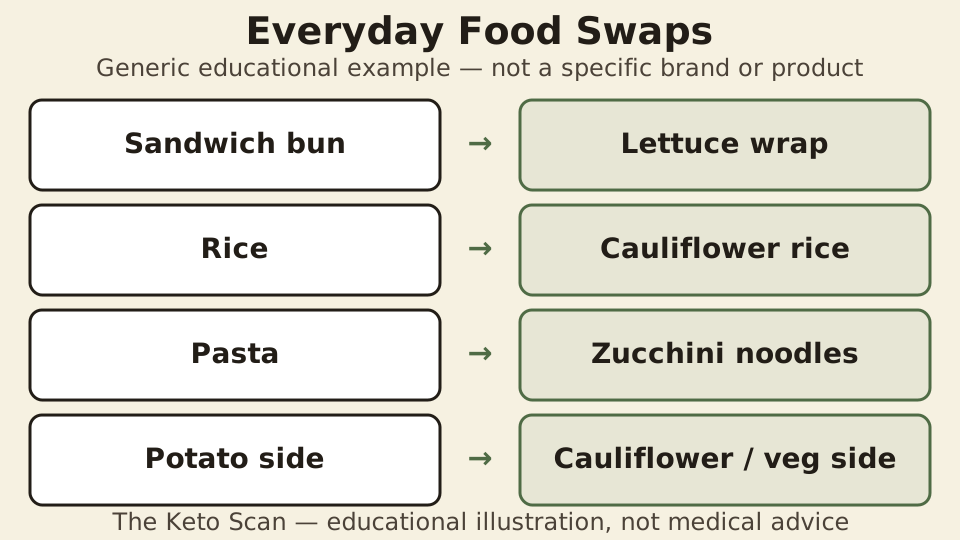
- Common swaps: lettuce/cabbage/egg wraps for bread, cauliflower rice or zucchini noodles for rice/pasta, mashed cauliflower or turnips for potatoes.
- Packaged "keto" or "low carb" products vary widely between brands — always check the actual Total Carbohydrate and fiber on the label.
- A lower-carb swap isn't automatically healthier — it simply carries less carbohydrate by the measure being compared.
What makes a food swap lower in carbohydrates?
A food swap is simply replacing one ingredient or dish with another that carries less carbohydrate for a comparable amount of food. Most everyday swaps work by trading a starchy or sugar-based food — bread, rice, pasta, potatoes, a sweet sauce — for a vegetable, egg, or other lower-carbohydrate base that plays a similar role in a meal. A swap does not make a meal automatically "keto"; the actual carbohydrate content still depends on the specific product, the recipe, the portion, and anything else added to the dish. Before assuming any swap lowers a meal's carbohydrate total, it helps to understand how Total Carbohydrate is read from a label in the first place — see our guide to reading nutrition labels for the reading order.
Why should you compare the same serving basis?
A lower-carbohydrate alternative is only meaningful when it's compared on the same basis as the food it replaces — the same weight, the same volume, or the same typical serving. A packaged product that looks lower in carbohydrate per serving can simply have a smaller stated serving size than the item it's replacing, which makes the comparison misleading rather than genuinely favorable. Our net carbs vs. total carbs guide covers this same-basis principle in more depth, and it applies just as much to comparing two whole foods as it does to comparing two packaged products.
What can replace bread, buns and wraps?
Large lettuce leaves, cabbage leaves, and thin egg-based wraps are common lower-carbohydrate alternatives to sandwich bread, burger buns, and tortillas. Each works differently. Lettuce and cabbage leaves add almost no carbohydrate of their own but change the texture and structure of a sandwich or wrap considerably. An egg wrap behaves closer to a traditional wrap in texture, but it changes the protein and fat content of the meal. Packaged low-carb breads, buns, and tortillas also exist, but their actual carbohydrate content varies widely by brand and recipe — always check the Total Carbohydrate and fiber lines on the specific product rather than assuming a "low carb" or "keto" front-of-package claim reflects the same value across brands.
What can replace rice and pasta?
Cauliflower rice and finely chopped broccoli are widely used alternatives to white or brown rice, made by pulsing the raw vegetable into rice-sized pieces and cooking it briefly. For pasta, spiralized zucchini noodles, spaghetti squash, and shirataki noodles (made from the konjac plant) are common substitutes, each with a distinct texture, water content, and cooking method compared to wheat pasta. None of these vegetable-based swaps are nutritionally identical to the food they replace — they generally carry less carbohydrate and less protein than rice or wheat pasta. Preparation, such as draining, salting, or briefly cooking to remove excess water, affects both texture and how much liquid ends up in the finished dish.
What can replace potatoes and starchy sides?
Mashed cauliflower and cooked, mashed turnips are common lower-carbohydrate alternatives to mashed potatoes, and roasted cauliflower, turnips, or radishes are often used in place of roasted potato wedges. These vegetables have a different starch content and cooking behavior than potatoes, so texture, cooking time, and how well a dish holds together can all differ from the original recipe. As with any swap, the final carbohydrate content of a prepared side dish depends heavily on what else is added — butter, cream, cheese, or a sauce can all change the overall nutrition profile of the finished dish independent of the base vegetable.
What can replace flour coatings and breading?
Ground nuts, ground seeds (such as flax or sesame), crushed pork rinds, and finely grated hard cheese are common lower-carbohydrate alternatives to flour, breadcrumbs, or panko when breading or coating a protein before cooking. Each alternative behaves differently under heat. Cheese-based coatings can brown and crisp differently than a traditional breadcrumb coating, and nut- or seed-based coatings can burn more easily at high temperatures, so recipes usually need some adjustment rather than a direct one-to-one substitution. Checking the ingredient list on any pre-made "breaded" or "coated" product is also worthwhile, since packaged coatings can include wheat flour, starches, or added sugar even when the front label emphasizes a different ingredient. Our hidden carbs guide covers where these coatings and packaged products commonly hide extra carbohydrate.
What can replace sweet sauces and dressings?
Unsweetened dressings, vinegar-and-oil combinations, and sauces made without added sugar or high-carbohydrate thickeners are common alternatives to sweet barbecue sauces, ketchup, teriyaki sauce, and many bottled salad dressings. Sauces are one of the easier places for carbohydrate to hide, since a small serving size can mask a meaningful amount of added sugar or starch-based thickener per the label's own serving basis — always compare the Total Carbohydrate line rather than relying on a "sugar-free" or "no added sugar" claim alone, since a sauce can still carry carbohydrate from other ingredients. See our list of keto-friendly foods for examples of naturally lower-carbohydrate sauce and dressing bases. These same swaps work when ordering at a restaurant, too — our guide to eating out on keto covers how to ask for them at the table.
What are practical lower-carb snack swaps?
Cheese, hard-boiled eggs, olives, and plain nuts are common lower-carbohydrate alternatives to chips, crackers, pretzels, and sweetened snack bars. Portion still matters with any of these — nuts in particular carry meaningful carbohydrate per serving despite being a common lower-carbohydrate snack choice, so checking the actual serving size and Total Carbohydrate on a package is worthwhile rather than assuming any nut or cheese product is automatically low in carbohydrate regardless of quantity eaten.
What can replace sweetened breakfast foods?
Eggs prepared various ways, plain unsweetened yogurt, and chia seed puddings are common alternatives to sweetened cereal, pancakes, and flavored oatmeal. Plain yogurt varies in carbohydrate content by type and brand, and flavored or "light" yogurts can carry more added sugar than an unflavored version despite marketing that suggests otherwise — reading the Total Carbohydrate and ingredient list is the reliable way to confirm this rather than relying on flavor descriptions or package claims.
Which packaged keto substitutes need closer label checking?
Packaged low-carb breads, tortillas, pastas, and snack bars marketed as keto-friendly vary considerably in actual carbohydrate content between brands and even between product lines from the same brand. A front-of-package claim like "keto" or "low carb" is not a regulated nutrition guarantee, so the only reliable way to evaluate a packaged substitute is to read its own Nutrition Facts panel and ingredient list rather than trusting the claim on its own. Our guide to reading nutrition labels walks through the exact fields to check, in order, and our net carb calculation guide explains how fiber and sugar alcohols are typically handled once you have those numbers.
How do you choose the most practical swap?
The most useful swap depends on the dish, the cooking method, and personal preference — a swap that works well in one recipe may not hold up in another, and texture or flavor differences are a normal part of trading one ingredient for another. Individual dietary needs, allergies, and preferences also matter, since not every swap suggested here is suitable for everyone. A lower-carbohydrate alternative is not automatically more nutritious or a better overall choice than the food it replaces — it simply carries less carbohydrate by the measure being compared. When shopping for swap ingredients or packaged alternatives, our keto grocery shopping guide covers how to compare products while you shop. To see these swaps already worked into a full week of meals, take a look at our 7-day keto meal plan for beginners.
A simple food-swap comparison
Hypothetical example (not a real brand): imagine a packaged sandwich bun with a stated serving size of one bun (about 65g) and 22g Total Carbohydrate on the label, compared with a large lettuce-leaf wrap used in place of that bun, which contributes substantially less Total Carbohydrate in this hypothetical comparison for the same approximate amount of food. Comparing the two on the same basis — one sandwich portion — the lettuce wrap contributes far less Total Carbohydrate in this hypothetical scenario, though it also changes the texture, structure, and fiber content of the sandwich considerably. This example is entirely hypothetical, does not represent any specific real product, and is not a medical prediction — actual values vary by brand, recipe, and preparation, so always check the specific product's own label.
Everyday food-swap comparison guide
The table below summarizes common higher-carbohydrate foods, a possible lower-carbohydrate alternative, and what to check before treating the swap as meaningfully lower in carbohydrate for your own situation.
| Higher-carbohydrate food | Possible alternative | What to compare | What can change the result |
|---|---|---|---|
| Sandwich bread or bun | Lettuce wrap, cabbage leaf, or egg wrap | Total Carbohydrate for the same serving size | Brand, recipe, and slice or portion size |
| Tortilla or wrap | Large lettuce leaf or a lower-carb packaged wrap | Total Carbohydrate and fiber on the specific product | Wrap size and packaged-brand formulation |
| Rice | Cauliflower rice or chopped broccoli | Total Carbohydrate per equal cooked weight | Preparation method and added sauces or fats |
| Pasta | Zucchini noodles, spaghetti squash, or shirataki noodles | Total Carbohydrate per equal cooked weight | Draining, water content, and sauce added |
| Potatoes | Mashed cauliflower or cooked turnips | Total Carbohydrate per equal serving | Added butter, cream, or cheese in preparation |
| Breaded coating | Ground nuts, seeds, pork rinds, or grated cheese | Ingredient list and Total Carbohydrate on any packaged coating mix | Coating thickness and cooking method |
| Sweet sauce or dressing | Unsweetened dressing or vinegar-based sauce | Total Carbohydrate rather than a "no added sugar" claim alone | Serving size and other thickeners used |
| Sweetened snack or breakfast item | Cheese, eggs, plain yogurt, or nuts in a checked portion | Total Carbohydrate for the actual portion eaten | Portion size and product-specific added sugar |
Review a packaged alternative with The Keto Scan
For supported products, scan a barcode to review available net-carb information, keto score, and The Keto Scan's product verdict before deciding whether a packaged alternative fits your needs. Results depend on the available product or label data, so always confirm the package.
Scan a product now →Sources and references
- U.S. Food and Drug Administration — How to Understand and Use the Nutrition Facts Label
- U.S. Food and Drug Administration — Serving Size on the Nutrition Facts Label
- U.S. Department of Agriculture — FoodData Central
This article is educational, not personal medical advice. Sources are selected from government, institutional, and peer-reviewed research where available. For guidance on your own health or diet, consult a qualified healthcare professional. See our editorial standards and full Disclaimer.